

Basal cell carcinoma (BCC) is the most common type of skin cancer, affecting millions of people each year. While it typically grows slowly and rarely spreads to other parts of the body, early diagnosis and treatment are important to prevent tissue damage and achieve the best possible outcome. At City Dermatology, our experienced dermatology team provides advanced treatment for basal cell carcinoma in Bensalem, PA, helping patients receive prompt, effective care from trusted skin cancer specialists.
Led by Imran Amir, MD, FAAD, a board-certified dermatologist with over 20+ years of dermatology experience and fellowship-trained Mohs surgeon, our practice offers comprehensive skin cancer screening, diagnosis, and treatment for basal cell carcinoma and other forms of skin cancer.
What Is Basal Cell Carcinoma?
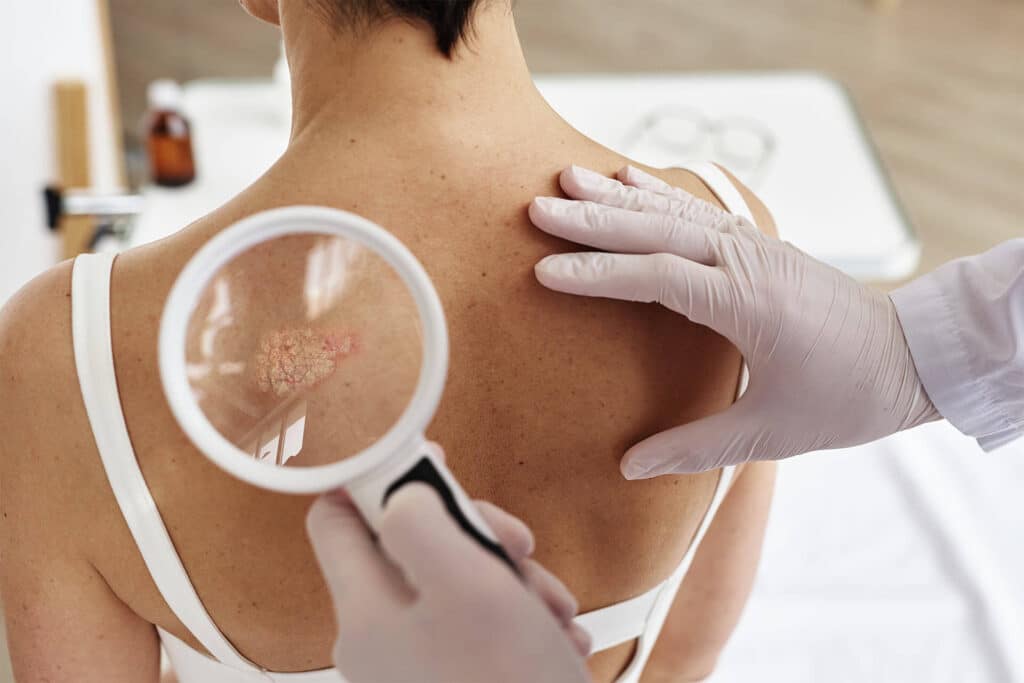
Basal cell carcinoma develops in the basal cells found in the outer layer of the skin. It is most commonly caused by cumulative exposure to ultraviolet (UV) radiation from the sun or tanning beds. Basal cell carcinoma often appears on areas of the body that receive the most sun exposure, including the face, scalp, ears, neck, shoulders, and hands.
Although basal cell carcinoma is generally not life-threatening, delaying treatment can allow the cancer to grow deeper into the skin and surrounding tissues, making treatment more complex.
Common Signs and Symptoms of Basal Cell Carcinoma
Basal cell carcinoma can appear in several different ways. Common warning signs include:
- A pearly or shiny bump on the skin
- A pink or red patch that does not heal
- A sore that repeatedly bleeds, crusts, or scabs
- A scar-like area that appears white, yellow, or waxy
- A persistent growth that slowly increases in size
If you notice any unusual skin changes, it is important to schedule an evaluation with a dermatologist as soon as possible.

Advanced Basal Cell Carcinoma Treatment Options in Bensalem
At City Dermatology, we provide personalized treatment plans based on the size, location, and severity of the cancer. Treatment options may include:
- Mohs micrographic surgery
- Surgical excision
- Cryotherapy
- Topical medications
- Radiation therapy for select cases
For many patients, Mohs surgery offers the highest cure rates while preserving as much healthy tissue as possible. This advanced technique is especially beneficial for basal cell carcinoma occurring on the face and other cosmetically sensitive areas.
Why Choose City Dermatology for Basal Cell Carcinoma Treatment?
Our team combines advanced dermatologic expertise with compassionate patient care. We focus on early skin cancer detection, accurate diagnosis, and individualized treatment plans designed to achieve the best possible medical and cosmetic outcomes.
Whether you need a skin cancer screening, evaluation of a suspicious lesion, or treatment for confirmed basal cell carcinoma, our dermatology specialists are committed to providing
Basal Cell Carcinoma Treatment Frequently Asked Questions
The primary cause of basal cell carcinoma is long-term exposure to ultraviolet (UV) radiation from sunlight or tanning beds. Other risk factors include fair skin, older age, a weakened immune system, and a personal history of skin cancer.
Basal cell carcinoma is generally considered the least aggressive form of skin cancer, but it should not be ignored. Without treatment, it can continue to grow and damage nearby skin, nerves, cartilage, and bone.
Basal cell carcinoma often appears as a shiny bump, a non-healing sore, a pink patch, or a scar-like area on the skin. A dermatologist should evaluate any persistent or changing lesion.
Mohs surgery is considered one of the most effective treatments for many basal cell carcinomas because it offers extremely high cure rates while preserving healthy tissue. It is frequently recommended for cancers located on the face, scalp, ears, and neck.
Although treatment is highly successful, patients who have had basal cell carcinoma have an increased risk of developing another skin cancer in the future. Regular skin cancer screenings and follow-up appointments are important for ongoing skin health.
Proudly Serving Patients Across Bucks County Townships and Northeast Philadelphia
Bucks County
Bensalem, Bristol, Feasterville, Langhorne, Southampton, Levittown, Morrisville, Falls Township, Middletown Township
Northeast Philadelphia
19154, 19114, 19115, 19116, 19136, 19152, 19111, 19149
Warminster Region
Warminster, Warrington, Warwick, Doylestown, Buckingham, Hatboro-Horsham, Abington, New Britain, Upper & Lower Moreland
References
- Zaenglein, A. L., Pathy, A. L., Schlosser, B. J., Alikhan, A., Baldwin, H. E., Berson, D. S., … & Thiboutot, D. M. (2016). Guidelines of care for the management of acne vulgaris. Journal of the American Academy of Dermatology, 74(5), 945-973.
- Lucky, A. W., Biro, F. M., Huster, G. A., Leach, A. D., Morrison, J. A., & Ratterman, J. (1997). Acne vulgaris in premenarchal girls. Archives of Dermatology, 133(8), 1041-1044.
- Layton, A. M. (2009). The use of isotretinoin in acne. Dermato-endocrinology, 1(3), 162-169.
- Hebert, A. A., Thiboutot, D. M., Stein Gold, L. F., Webster, G. F., & Leyden, J. J. (2020). Efficacy and safety of topical minocycline foam for moderate-to-severe acne vulgaris: A randomized, double-blind, vehicle-controlled study. Journal of the American Academy of Dermatology, 82(3), 832-835.
- Gold, M. H., Andriessen, A., Biron, J. A., & Garassino, M. C. (2016). Light-based therapies in the treatment of acne vulgaris. Dermatologic Surgery, 42(3), 349-357.
- Shah, S. K., Alexis, A. F., & Resh, W. (2017). Topical dapsone in acne: Overview and safety profile. Journal of Clinical and Aesthetic Dermatology, 10(1), 34.
- Fabbrocini, G., Annunziata, M. C., D’Arco, V., De Vita, V., Lodi, G., Mauriello, M. C., … & Monfrecola, G. (2009). Acne scars: Pathogenesis, classification and treatment. Dermatology Research and Practice, 2009.